Wood in Interior Design: Natural Wood Ideas by Room
Explore wood in interior design: why natural wood works, how to use it room by room, and which species and finishes suit your space.
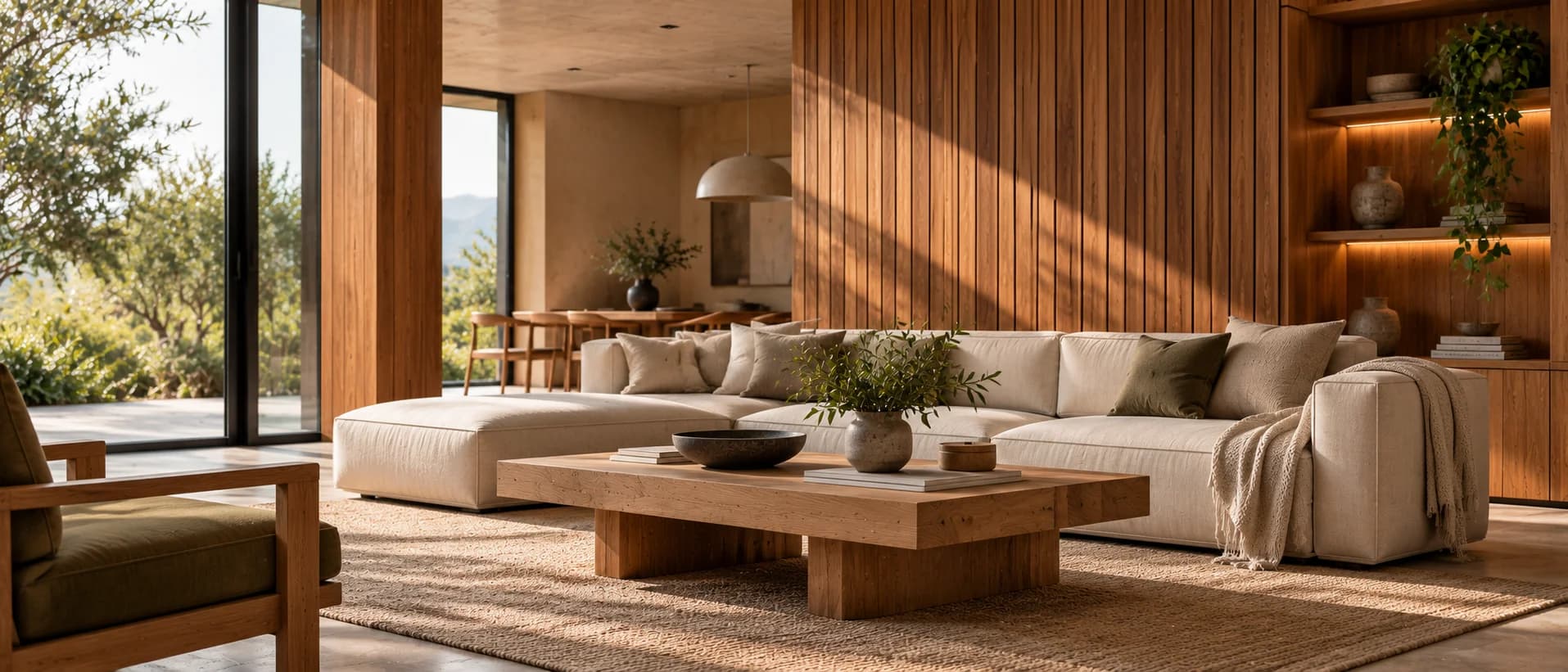
Wood in interior design works naturally because it does so much without asking for any loud attention on itself. Natural wood when used in any space tends to add warmth and texture to a room, and at the same time, since it isn't fixed to one style of design, it works well with rustic, contemporary and modern as well as classic schemes, all alike.
The primary technique when using wood in interior design is restraint because when wood is used with purpose and effectiveness, wood brings balance to a space. However, if wood is used everywhere in an interior design, it can very easily overwhelm the place. This guide covers why natural wood earns its high place in interior design, how designers use it room by room, which species and finishes to consider, and how to avoid the common mistakes people tend to when using wood in their design.
Why Use Natural Wood
Designers often keep returning to natural wood as it offers qualities that manufactured surfaces struggle to imitate, such as -
Warmth: Natural wood makes it easy to add softness to plain walls and hard surfaces. Designers often use wood this way to add warmth to rooms that are very white and simple.
Texture and character: Natural wood adds depth and character to a surface because of its grain and texture. The small differences in every piece of wood make sure that no two boards are the same. This gives each space a sense of individuality.
Connection to the outdoors: Designers also talk about wood as a way to bring the world inside as it brings the feeling of nature into your home.
Durability: Natural wood is also famous for being strong and lasting a long time and this is one of its biggest advantages.
Timelessness: Wood works well in both fashioned homes and new modern homes. It doesn't usually look out of date as time passes or as trends change.
Wood in Interior Design by Room
Living room - This is the space for statement pieces: be it a wide-plank oak floor, a wood-panelled feature wall behind the television or exposed ceiling beams. Let one surface lead and keep the others minimal for the best look.
Bedroom - Wood here is about bringing peace and calm. A timber headboard wall, a wood-slat accent or a solid wood floor adds warmth without visual noise. Lighter species such as ash and oak are the best as they keep the mood restful with their colour tones.
Kitchen and dining - Timber worktops, open shelving and wood-faced cabinetry easily soften the hard surfaces of a kitchen, along with a solid dining table that becomes the centre of the home.
Bathroom - Unlike what most people think, wood can work in bathrooms when the species and finish are right. Thermally modified timber is a particularly good fit, as it absorbs less moisture and stays stable in humid conditions. Moreover it is widely used in saunas and spa spaces and is best suited for such wet applications.
Entrance, stairs and ceilings - A timber entrance can often set the tone for the whole home. Staircases, ceiling panels and slatted partitions are also ways to introduce wood without overwhelming a space with too many applications all at once.
Wood Types & Finishes
Species
Thermo Ash: Thermo Ash is known for its exceptional durability and its expressive grain, when it goes through thermal modification, its pale tone deepens into a rich brown that sits naturally in contemporary schemes. Its recommended uses are for cladding, facades and panelling, where the grain can be seen and appreciated.
Thermo Pine: Light and clean and accessible, Thermo Pine is one of the most versatile woods in our NordenTherm range. Moreover, after it goes through thermal modification, it adds stability, which lets it perform across cladding, interior wall panelling, facades and even decking as well.
Thermo Birch: Thermo Birch is a fine-grained hardwood that has an even, refined character and is an elegant choice for cladding and facades as well as wall panelling, especially in spaces that call for a composed look, as it brings with it a uniform texture.
Thermo Ayous: Thermo Ayous is lightweight and smooth in appearance, and since it is dimensionally stable, it works across cladding, facades and interior panelling, including steam bathrooms.
Thermo Oak: Thermo Oak is strong and versatile, with a deepened tone after thermal modification. It is a solid choice for both interiors as well as exteriors alike.
IPE: IPE is our ultra-dense hardwood from the Amazon, with a deep brown tone and exceptional strength, and it is made for decking and high-traffic outdoor structures, where durability matters the most.
Natural Oak: Natural Oak, part of our Signature Europa Collection, is a classic hardwood known for its distinctive grain, natural strength and timeless appeal; it brings warmth and sophistication to interior cladding, flooring and furniture.
Natural Ash: Natural Ash, also part of the Europa Collection, combines a light, natural tone with a distinctive grain and understated elegance. Its versatility makes it well suited to contemporary interiors, furniture and interior panelling.
Natural Pine: Natural Pine is the last of our Europa Collection, with its soft, natural character, Natural Pine brings a sense of warmth and simplicity to interior spaces, and it is best suited to interior cladding, flooring and furniture.
Finishes/Coatings
Cypress: A warm, golden tone that accentuates the natural colour and grain of timber.
Natural Transparent: This coating works well in preserving the wood’s natural appearance while also adding a subtle finish to it.
Chestnut Brown: This coating brings a rich, earthy brown colour to the wood that lends warmth and depth to timber surfaces, making them look more pronounced and perfect for interior applications.
Burnt Red: Burnt Red gives the wood a distinctive coating of reddish tone that adds not just colour but also personality to the timber while still allowing the wood grain to remain visible.
Design Tips
Give Wood one starring role.
When you start designing with wood, one strong statement piece made of timber generally does more than using several small pieces throughout the room.Limit your wood tones.
People when staring out with wooden interior design often use too many wood tones in one room, which is a common mistake that is fairly easy to happen. To get the best results, aim for a consistent finish without fixating over matching every piece with one another.Mix materials.
Mixing materials is the key to having a great space, say for example, metal brings contrast, which we see in a wood table with black steel legs that feels modern. Similarly, glass lightens heavy wood and marble tend to add elegance.Match finish to the room.
When decorating any interior space, you need to definitely consider the room size as well as the amount of natural light it receives. To get your desirable results you need to remember that woods that are lighter in shade suit small or dim rooms, while the woods that have a darker shade suit large, bright rooms.Add soft materials.
One of the go to techniques used by designers is by mixing hard materials with soft ones, such as rugs and curtains, that easily stop wood from feeling too heavy in a space
Bring Natural Wood into Your Space
The finest interiors are built on materials chosen with care. Lognest offers premium, responsibly sourced timber for floors, walls, ceilings and bespoke pieces, with the expertise to help you select the right species and finish. Visit our Experience Centre to see the grain and tone in person, or contact our team to begin your project.
Frequently Asked Questions
What is the best wood for interior design?
There is no single answer. Oak and ash suit most spaces, walnut adds depth and thermally modified timber excels in humid areas.
Is natural wood hard to maintain?
Not exactly, as regular cleaning and an occasional re-oil or refinish keep it in good condition.
Can I use wood in a small room?
Yes. Lighter species and a restrained use of timber help small spaces feel warm without feeling closed in.
How do I combine different woods?
Keep to a limited palette, and match undertones, warm with warm and cool with cool.
Is wood a sustainable interior material?
Yes, when it is responsibly sourced. Look for FSC certification as proof that the timber comes from well-managed forests.