Wood Cladding Guide: Types, Costs & Best Exterior Timber
A practical wood cladding guide covering types, exterior wooden cladding options, pine timber, costs and maintenance for lasting facades.
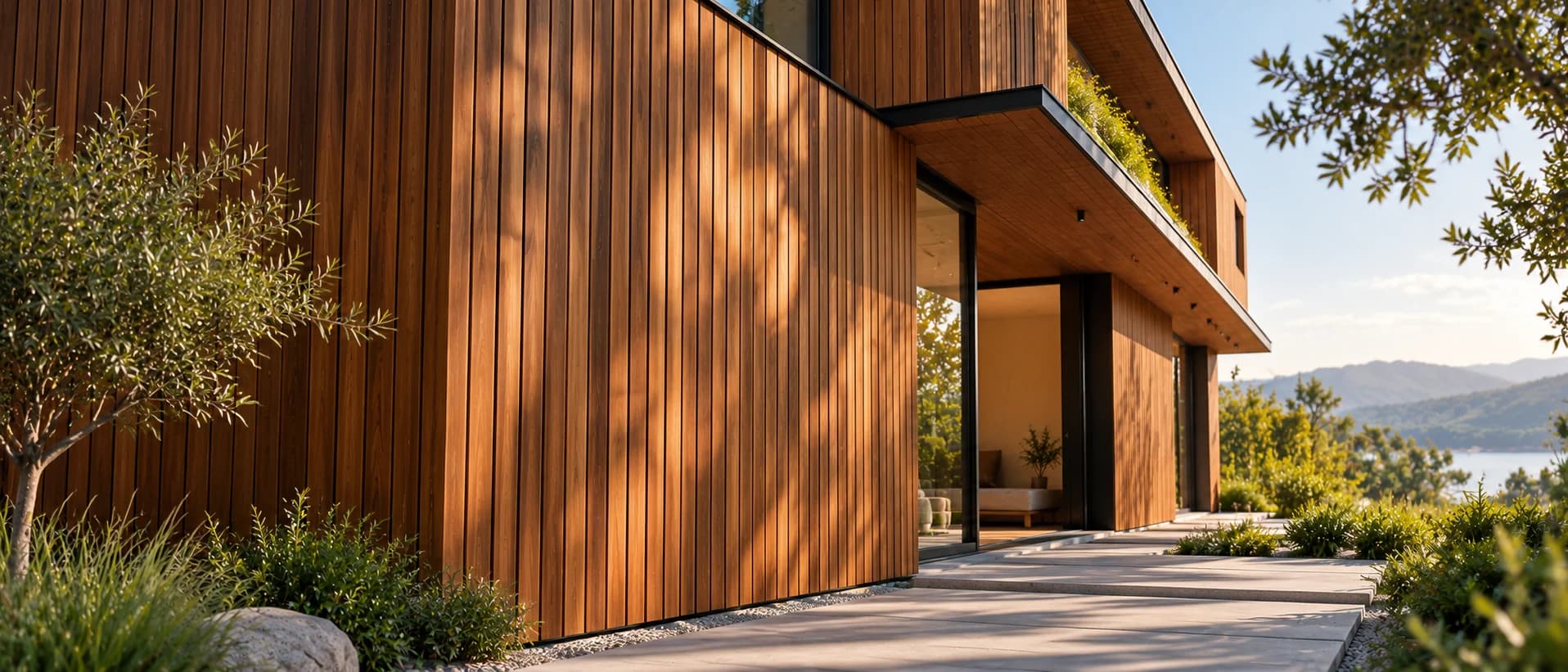
Cladding is a construction technique where one material is applied to the surface of another for protection, insulation, or aesthetic enhancement. It serves as an exterior covering that shields buildings from weather, temperature fluctuations, and noise while also enhancing their visual appeal with texture, color, and design elements. Wood cladding not only decides how a building generally looks, but it also decides how well the walls behind it face against the weather. Choosing the wrong timber can easily happen, and that will only result in replacing boards sooner than you had planned. However, with the proper choice of timber, the facade that you own can work for years, even decades with minimal maintenance and care. This blog covers the main profiles and species used in cladding, how thermal modification changes the structure of wood, making it more resilient, as well as where pine wood fits in, what drives the cost, and how to look after your boards once they are installed.
Types of Wood Cladding
Wood cladding can be categorized by wood species or by cladding profile. Here, we will be focusing on the profile, because it shapes both the look and how well the wall sheds water.
Tongue and Groove (V-Groove / V-Joint): Boards slide together tightly using a protruding edge (tongue) and slot (groove), creating a clean surface with a small "V" shaped gap between planks for a modern look.
Featheredge (Weatherboard): Tapered boards,thick on one edge, thin on the other, installed horizontally with an overlap to quickly shed rainwater, commonly used for rustic designs or barns.
Shiplap: Features a rebated overlap edge that gives a tight, smooth horizontal or vertical line with superior water-shedding ability
At the same time, apart from the cladding profile, direction matters too, as we see that horizontal boards resist moisture better than the vertical ones. However, if you do go vertical, the overlap should face away from the prevailing wind. Boards can also be laid in patterns or tiled and finished with paint, oil or other coatings, so the same timber can look quite different from one project to the next.
Exterior Wooden Cladding
Exterior wooden cladding goes through a lot as it faces all the natural elements such as the sun, rain, humidity and temperature swings, along with monsoon moisture and strong UV. The species you choose ultimately sets the baseline for how the cladding will behave outdoors. Two main routes lead to durable exterior wooden cladding
Naturally durable species: this refers to the certain category of hardwoods, which resist decay thanks to their density and natural oils, such as IPE, Teak, European Oak and a few more.
Thermally modified timber: this refers to the timber where heat and steam permanently change the wood's cellular structure, improving stability and decay resistance without the use of any added chemicals.
Out of these two, thermal modification has become the preferred route for premium facades, as this process heats timber to very high temperatures, typically somewhere around 185°C and 215°C, in a low-oxygen environment, which reduces the wood's ability to absorb moisture, so the wooden boards tend to swell and shrink far less and also bring no chance of warping. The high heat treatment also leaves the timber with a rich, even brown colour.
Pine Timber
Pine timber is widely valued for its fast growth and abundant availability, making it a practical choice for a range of woodworking applications. Different varieties offer distinct visual characteristics: Scots pine features prominent, rustic knots, while radiata pine generally offers a more uniform appearance. Its warm tones and clean grain make it versatile for both traditional and contemporary spaces. However, untreated pine has limited natural resistance to moisture and biological decay, which can lead to swelling, cracking and deterioration when exposed to exterior conditions. This is where thermally modified pine makes the difference, as through controlled heat treatment, pine gains improved dimensional stability and resistance to biological decay while retaining much of its workability and cost advantage. The treatment also reduces moisture absorption and resin movement, making the wood better suited to exterior applications.
Wood Cladding Costs
Pricing varies widely depending on the wood, and it is helpful to understand what drives it:
Species: Pine generally sits at the accessible end, while thermally modified pine and ash in the middle, and dense tropical or premium hardwoods at the top.
Treatment: Although thermal modification or certified treatment adds cost, it however reduces long-term upkeep and maintenance costs.
Profile and thickness: Timber having complex profiles as well as the ones having thicker boards generally cost more to mill, increasing their price.
Installation: Concealed fixings, subframes and ventilated cavities add to labour and materials, but protect the investment.
Finish: Lastly factory-applied oils or coatings generally cost more upfront but save time when used later on site.
So, it is better to compare the lifetime cost rather than only the purchase price as a cheaper board that needs frequent replacement or refinishing can cost more over twenty years than a durable timber installed correctly the first time.
Maintenance
Wood cladding is not high maintenance, but it does require attention in certain instances. Some of the easy ways to maintain wood cladding are -
Routine Check - Especially after the monsoon season, for splits, loose fixings or areas where water is collected.
Cleaning - A gentle dusting with a soft brush and mild soap to remove dirt and algae is often enough.
Re-oil as needed - Only if you wish to preserve the original colour as oiled timber typically needs refreshing every one to three years depending on exposure.
Keep vegetation clear - Remove any kind of vegetation or growth in the boards to allow airflow and prevent trapped moisture.
Choosing Your Cladding with Lognest
The right wood cladding is often a decision that is made once and lived with for decades. Lognest offers premium, responsibly sourced timber, including thermally modified options suited to Indian climates, along with guidance on species, profile and detailing. Visit our Experience Centre to compare samples in person, or speak to our team about your next project.
Frequently Asked Questions
What is the best wood for exterior cladding?
There's no single best. Cedar, larch, Douglas fir, oak, iroko and thermally modified timber all work, with different trade-offs in price, stability and maintenance.
Can pine be used for cladding?
Yes. Pine is affordable and widely available, and thermal modification gives it better durability and stability for outdoor use.
Does thermally modified wood need maintenance?
Less than ordinary timber, but not none. Oiling or painting slows the fading to grey, and the interval between treatments is longer.
Is thermally modified timber sustainable?
Thermory says its process is chemical-free, so the boards don't need hazardous-waste disposal and can be recycled or composted at the end of their life. Check this for each product.