What Is Natural Wood? Natural Wood vs Engineered Wood vs Laminate
Learn how natural wood, engineered wood and laminate differ, how to identify real timber, and which material works best for flooring, walls and outdoor applications.
Introduction
Different kinds of natural wood may look similar across different applications at first glance but the performance and finish can significantly affect its appearance, performance and service life in different interior and exterior applications. From engineered wood, laminate wood to solid wood which is also known as natural wood, understanding what each species offers helps you to make a more informed decision keeping your project requirements in mind, be it interior application or exterior application.
What is Natural Wood ?
Natural wood is timber which is directly obtained from trees and processed into planks, boards or profiles. Solid wood is made from a single piece of timber, to retain the texture , grain and pattern of the original wood throughout the thickness. Because of this, Natural wood flooring is one of the best choices of architects, as it holds the real wood appearance, ability to be refinished depending on its thickness and condition, and the way it develops character over time. It ages with time at your place. Natural wood can be used in different interior applications based on your project requirement including wall panelling, ceiling, door, furniture & cabinetry etc. it can also be used in exterior, depending on the species and its suitability for the intended environment.
What is Engineered Wood ?
Engineered wood is a composite manufactured by wood strands, binding wood fibers, wooden particles or veneers together by using heat, pressure and adhesives. Engineered wood has the real wood top layer which is known as the skin. The skin is made of noble hardwood (such as oak, walnut, or maple) that gives the floor the exact look and feel of solid. The middle and most critical structural component that provides dimensional stability. It is typically made from multiple thin layers of wood veneer glued together with their grain patterns oriented perpendicular (crisscross) to each other to resist warping and expansion, finely compressed wood fibers mixed with resin, offering a dense and smooth core and finger core made of Small pieces of milled softwood running perpendicular to the top lamella, sometimes flanked by parallel plywood layers for extra reinforcement.
Compared to laminate wood,engineered wood has a real timber surface which makes it a preferred choice for redefined interior applications. Engineered wood flooring like oak flooring can serve the look and feel of natural wood while offering double flexibility depending on installation and certain other aspects. Engineered wood flooring’s performance depends on some core factors like construction method, installation process and wear-layer thickness.
What Is Laminate Flooring?
Laminate wood is not a real wood product, it is a manufactured material which is designed to replicate real wood appearance. Laminate wood typically consists of a high-density fibreboard (HDF) core, a printed decorative layer that mimics wood grain, and a protective top layer that helps resist everyday wear and scratches. Unlike solid wood or engineered wood, it does not have a real wood surface. Laminate wood is commonly used for different interior applications like flooring, panelling and furniture finishes where wood like appearance is negotiable and low cost margin and easy maintenance is a priority.
Natural Wood vs Engineered Wood vs Laminate
Feature | Solid natural wood | Engineered wood | Laminate |
Construction | Solid timber throughout | Real wood surface with layered core | Printed décor over a composite core |
Appearance | Unique natural grain retaining the real wood finish | Real wood finish in the surface | Wood-look printed pattern |
Stability | More sensitive to moisture changes | Generally more dimensionally stable because of core layer | Depends on application and moisture protection |
Refinishing | Often possible | Depends on wear-layer thickness | Generally not possible |
Best suited for | Flooring, panelling, furniture | Flooring and selected interior applications | Primarily interior flooring |
How Can You Tell Real Wood from Imitation?
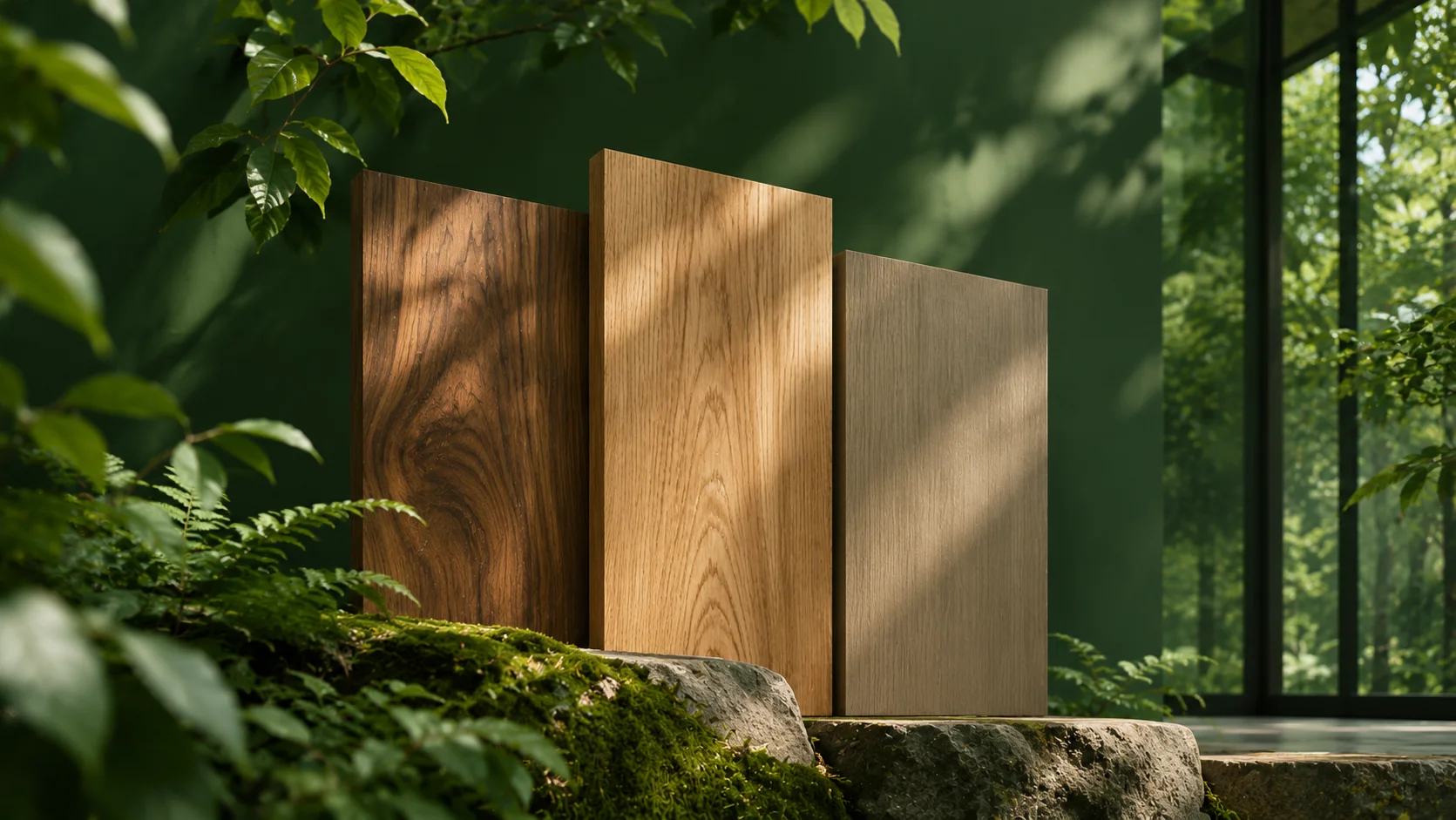
To understand the difference between real wood vs engineered wood then you have to look closely. Check the grain, and texture and edges of the two types of wood in different applications. Natural timber has variations in color and grain, whereas laminate tends to repeat a printed pattern. Solid wood aka natural wood makes its appearance visible throughout its thickness, engineered wood is a real wood surface over a different core. Best to check the product specifications to verify the construction before you choose one for your own project.
Which Material Is Best for Floors, Walls and Outdoors?
Solid wood and engineered wood are both good options for flooring depending on the subfloor, moisture conditions and installation requirements. Laminate can be used in interior spaces where a wood-look finish is required for that particular space.
Real wood brings natural depth and texture to wall paneling and ceilings. For outdoor uses like decking and cladding, use timber specifically designed for external exposure which has the ability to withstand changing weather conditions, with correct detailing and installation. Regular laminate is not designed for the weather outside.
Frequently Asked Questions
Is natural wood the same as solid wood?
Solid wood is made from a single piece of timber, with its natural grain and character running throughout the board. Natural wood can also refer to genuine timber used as the top layer of engineered wood flooring.
Is engineered wood made from real wood?
Yes. Engineered wood flooring features a genuine timber surface bonded to a layered core. It offers the appearance of real wood while providing greater dimensional stability than solid wood in many applications.
Is natural wood better than laminate?
Natural wood offers authentic grain patterns, unique variations and the possibility of refinishing, depending on the product. Laminate replicates the look of timber using a printed decorative layer and is generally easier to maintain. The right choice depends on the project's design, budget and intended use.
What does 100% real wood mean?
The term indicates that a product is made from genuine timber rather than a printed wood-look surface. However, it is important to distinguish solid wood, which consists entirely of timber, from engineered wood, which combines a real wood surface with a layered core. Always check the product specifications to understand its construction.
Choosing the Right Wood for Your Project
Choosing the right wood for any kind of application, be it interior or exterior depends on several factors. It goes beyond appearance. To make an informed decision one has to understand how the material will perform in the space it will be used. At Lognest, we deal with 100% real wood, offering real wood and engineered wooden flooring solutions to diverse modern architectural applications. From interior applications like flooring and wall panelling to exterior applications including cladding and decking, the right choice depends on the application, environmental conditions and the character the particular project demands.