Thermal Wood: What Is Thermowood & Why Use It for Cladding?
Discover what is thermally modified wood, how thermal modification improves timber structure and why Thermowood is a best choice for exterior cladding.
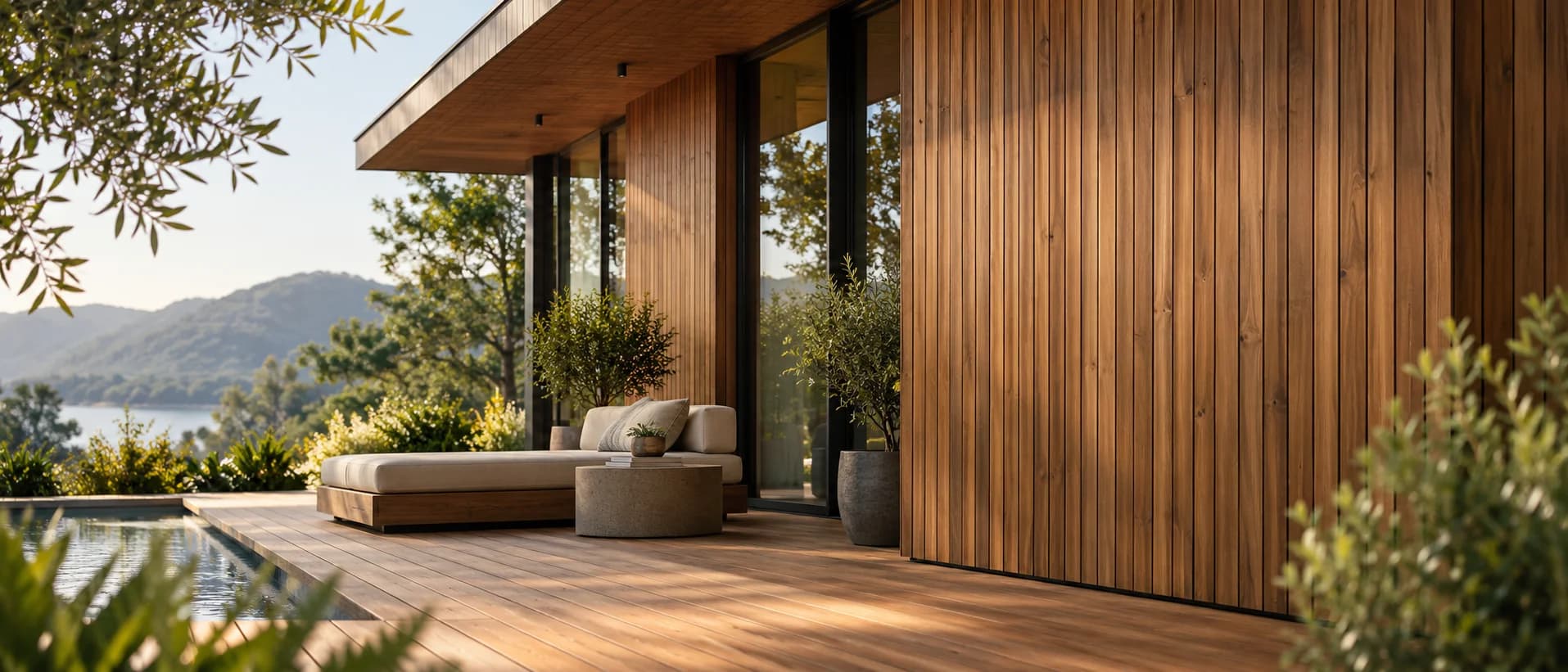
Real timber has always been one of the most used building materials from ancient times. In recent times timber has been valued as a building material because of its grain, texture and ability to connect people with nature. But when used outdoors untreated, where it has to deal with prolonged sun exposure, moisture, heat & humidity it tends to contract, swelling and creaking. In this situation, thermal wood comes as a rescue which can withstand changing weather and extreme outdoor conditions because of its improved dimensional stability and resistance to moisture absorption. This advantage makes thermally modified wood a best choice for thermowood cladding, decking, facade, pergola and other exterior applications.
What Is Thermal Wood?
Thermal wood, commonly known as thermowood is a real timber which undergoes a controlled heat and steam treatment known as thermal modification treatment to alter wood’s cellular structure which includes physical and chemical properties. Due to this modification process thermal wood becomes more dimensionally stable and moisture resistant which makes it less prone to decay, fungi or termite attacks. Unlike conventional chemical preservation, thermal modification uses controlled heat and, depending on the process, steam or other controlled conditions.
Standard thermal modification process includes stages of high-temperature drying, thermal modification, cooling and moisture conditioning. The treatment permanently changes aspects of the wood structure, including its interaction with moisture. The first phase which is known as kiln dying, the wood gets placed into a specialized kiln and gradually heated. Moisture content is driven down to nearly 0% over 35 to 46 hours (total process can span 48 to over 100 hours depending on the method). In the whole process steam has been used to stop cracking or burning. Then in thermal modification the wood is placed into a heated chamber with a controlled temperature 180°C to 230°C. Then begins the cooling process where wood is cooled with a controlled misting or water-steam phase that restores its moisture content back to a stable 4% to 7%.
Why Is Thermowood Cladding Used for Exteriors?
The biggest challenges with exterior wooden application is the dimensional movement of wood due to changing weather. Wood naturally responds to moisture, rain fall, heat and humidity and tends to swell or shrink. But thermally modified wood has reduced moisture affinity, which improves its dimensional stability. This makes Thermowood cladding useful where timber is exposed to changing outdoor conditions.
Enhanced Dimensional Stability - Thermally modified wood absorbs less moisture which reduce the chances of unnecessary swelling and shrinkage, helping cladding maintain greater dimensional consistency through changes in humidity and weather.For outdoor applications like exterior cladding & facades this refined stability is important because the performance of the overall installation depends not only on the timber itself but also on correct detailing, fixing and ventilation.
Naturally Resistant to Biological Decay - Thermal modification reduces the resin content of wood cells which improve the biological durability of wood by changing components of the cell wall that contribute to moisture uptake and biological susceptibility. Thermal modification boosts resistant to decay and similar biological agents which can cause cracking and other challenges. However, the overall performance still depends on the species, treatment level, exposure and installation conditions. Thermal modification should therefore be considered part of a complete cladding specification rather than a substitute for proper detailing.
Rich Dark Colour- Heat treatment naturally darkens timber. Depending on the species and intensity of treatment, lighter woods can develop warmer brown, amber or deeper tones.This makes thermally modified wood particularly suitable for contemporary architecture, where the material itself is expected to contribute to the visual identity of the façade.
Thermo Ash: A Hardwood Option for Cladding
Thermo Ash is one the most used thermowood species for outdoor application combining the natural characteristics of ash wood with the redefined changes that comes with thermal modification. Ash is a hardwood with distinctive texture and grains, making it a perfect choice of Facade applications which needs a strong character to hold the whole feel of the property.
Thermally Modified ash wood offers greater stability and durability in outdoor setting compared to untreated ash wood but the difference depends on the treatment level and application it is being used for. For architects, developers and interior designers Thermo Ash can be a suitable choice when the timber is intended to remain visually prominent as well along with acting as a protective exterior layer.
Thermo Pine Wood: A Versatile Timber for Exterior Applications
Thermo pine wood is another most used timber for exterior application because of its distinct visual appeal and long term performance. Natural line comes in lighter tones and has visible knots which helps to create a more relaxed and tactile appearance. Pine being a softwood, after thermal modification gives tough competition to any other hardwood in terms of stability and durability. After the thermal modification process, its colours become a little deeper along with improved dimensional stability, making it the most preferred choice for exterior cladding, decking, facade and application here weather resistant and durability are key factors.
Thermo pine wood cladding then becomes a strong and best choice when the overall architecture asks for a natural looking timber facade with more pronounced grains and textures and a comparatively understated material character.
Choosing the Right Timber for Cladding
Thermal modification process alone can not be the only determining factor whether a timber is right for application like facade or exterior cladding. The chosen wood species, modification level, profile, required dimension, substructure, installation & fixing methods, ventilation, everything should be under consideration. As an example, for properties in coastal areas which are heavily exposed to a high-moisture environment, the specification and requirement may differ from a sheltered residential elevation. The right way to select timber is according to where it will be used, how it will be installed and how you want it to age.
At Lognest, from selecting the wood species to the whole process of treatment, everything takes place at their own thermal modification setup in Sweden. Here, thermal modification is part of a broader approach to working with 100% real wood. Lognest’s NordenTherm collection includes Thermo Pine, Thermo Ash, Thermo Birch, Thermo Oak and Thermo Ayous, with thermal processing overseen in their own facility.
The right timber is not simply the one with the strongest specification on paper. It is the one whose species, treatment, profile, finish and performance align with the architecture. For façades and exterior applications, that means selecting a material that can perform outdoors while allowing the natural character of real wood to remain part of the design.
Frequently Asked Questions
Is thermal wood real wood?
Yes. Thermal wood is real timber which undergoes controlled heat and steam treatment, called thermal modification. The treatment changes its properties; it does not turn it into a wood-plastic composite or synthetic material.Is Thermowood good for exterior cladding?
Thermally modified wood can be well suited to exterior cladding because thermal modification can improve dimensional stability and biological durability. Correct installation and detailing remain essential.Is thermo pine wood suitable for façades?
Yes, thermally modified pine is used for exterior cladding and façades. Its suitability depends on the treatment level, profile, exposure and installation specification.Does Thermowood turn grey outdoors?
It can. Like other natural wood, thermally modified timber can weather under UV exposure and gradually develop a silver-grey surface. A suitable finish can be specified when retaining the original colour is important.