Solid Wood Flooring: Types, Pros & Cons, and Cost in India
Explore solid wood flooring, its benefits, installation and maintenance, and what influences solid wood flooring prices in India. Discover premium timber solutions from Lognest.
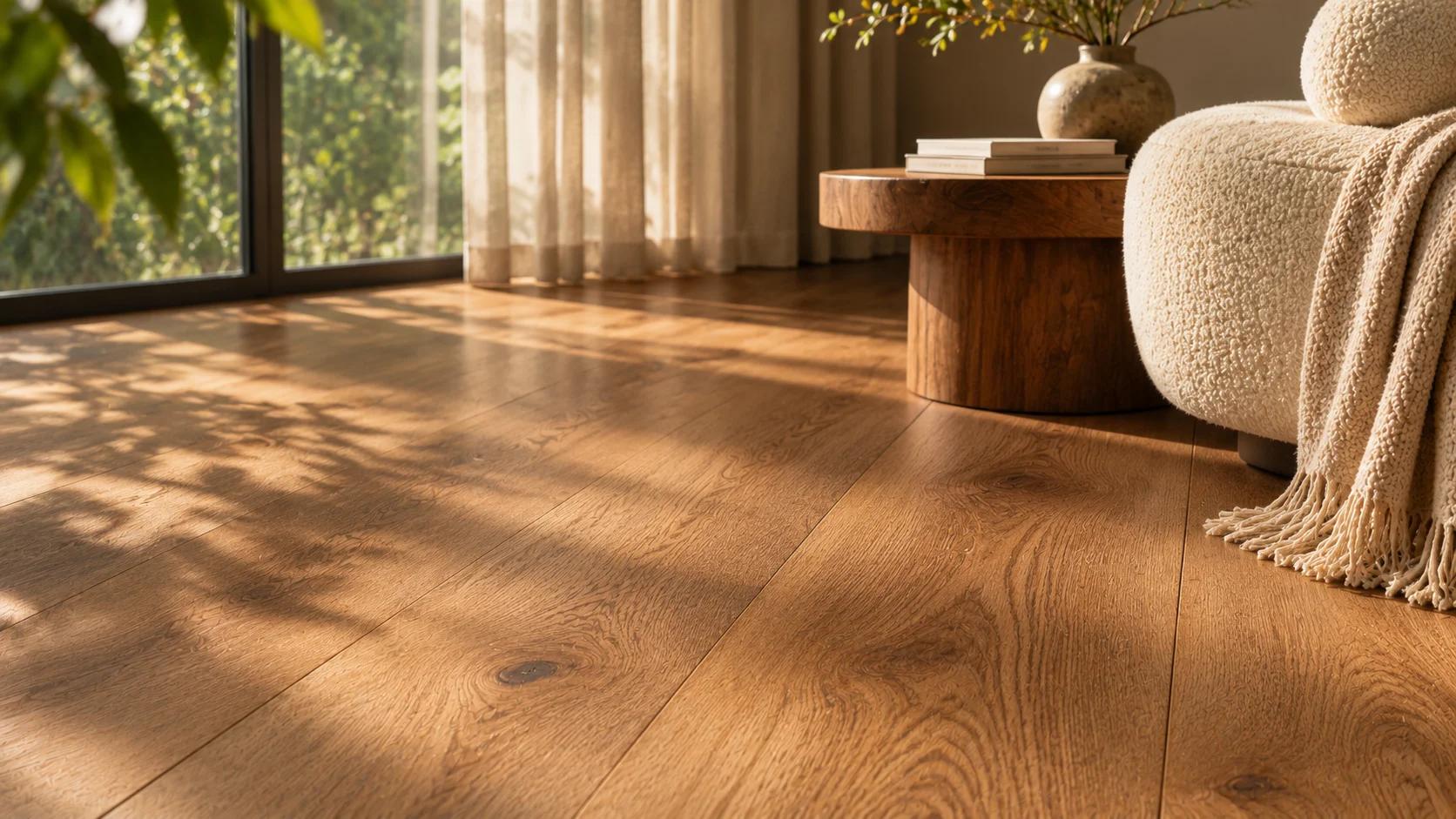
Solid wood flooring is just what it sounds like: every plank is milled from a single piece of timber. There is no plywood core, no printed layer and no laminate. At Lognest, our approach to timber begins with the material itself, which is why we only work with responsibly sourced wood, helping architects as well as homeowners find flooring solutions that complement their vision along with the practical requirements.
However, choosing a wooden floor involves a lot of decisions. Apart from selecting an attractive species, you also need to weigh solid vs engineered flooring, the conditions of the installation site, maintenance requirements and the total project cost, all of which deserve equal consideration. This guide explores solid wood flooring, its advantages and limitations, the factors that influence its price in India, and how to choose the right timber for your space.
What is Solid Wood Flooring?
Solid wood flooring is made from planks that are milled from a single piece of timber. Each board consists of solid wood throughout its thickness, rather than a real-wood surface layer bonded to a supporting core. A solid wood plank is typically 18 - 22 mm thick, with a tongue on one edge and a groove on the other so the planks lock together. Because the wood runs solid from top to bottom, the floor can be sanded and refinished several times, and a well-kept solid floor can last 50 - 100 years.
One of the defining advantages of solid hardwood flooring is its potential for renewal, as wherever the board’s thickness and condition permit, the floor can be sanded and refinished to address surface wear and refresh its appearance. However, solid timber responds to changes in moisture and humidity and its long-term performance depends on appropriate timber selection, moisture assessment, subfloor preparation and the final installation.
Which woods are used?
The right timber depends on the desired grain, colour, design style, expected foot traffic and environmental conditions. Species should be assessed alongside their grade, finish, dimensions and suitability for the intended flooring system.
White Oak: White oak is generally valued for its balanced grain, natural warmth and versatility across interior styles. As part of Lognest's Europa Collection, European White Oak offers designers a natural timber option for interiors built around material quality and considered detailing. In flooring applications, oak can be paired with neutral walls, stone, metal and natural fabrics.
White Ash: White Ash is famously known for its distinctive grain and lighter visual character. It can introduce movement into an interior without relying on strong colour contrasts or elaborate patterns. Lognest's Europa Collection includes White Ash, a relevant material to explore when developing a coordinated natural-timber palette.
Natural Pine: Natural Pine is often associated with lighter tones and a more informal, natural character. Its grain and knots contribute to interiors that feel relaxed and connected to the material's origin. Lognest's Europa Collection includes Natural Pine for interior applications.
Teak: Teak wood flooring is a common choice in India. It has a golden-brown tone and natural oils that help it handle moisture better than many other timbers. It usually sits at the higher end of the price range, so be sure to ask for the grade and origin before you buy.
What are the pros and cons?
Pros
Premium look and feel: Solid wood flooring brings a sense of warmth and texture to any interior space, as its underfoot feel is generally warmer and less hard-sounding than stone or tile, making living spaces feel more comfortable and inviting.
Long-lasting and renewable: With proper care, solid wood can last for decades, and its surface can also be sanded and refinished to restore its appearance and fix scratches and discolouration.
Develops character over time: Unlike synthetic flooring, natural wood develops a distinctive patina as it ages, while subtle changes in colour and grain can add depth, allowing the floor to mature beautifully with the interior.
Individual planks are repairable: Small minute damages do not necessarily mean replacing the entire floor, as wherever the installation allows it, a damaged plank can be removed and replaced, making maintenance more practical over the years.
Supports a timeless design: With natural grain patterns and varied wood tones, solid wood complements a range of interior styles, from classic and traditional spaces to contemporary and minimalist homes.
Cons
Sensitive to changes in humidity: Solid wood naturally expands and contracts as moisture levels change, so proper acclimatisation, suitable installation methods, expansion gaps and reasonably stable indoor humidity are essential to minimise cupping and warping.
Unsuitable for persistently wet areas: Prolonged exposure to water and moisture can damage solid wood flooring. Bathrooms, balconies and open terraces are generally unsuitable applications, while kitchens and other areas that are prone to spills require careful consideration and appropriate maintenance.
Can fade or change colour in sunlight: Prolonged exposure to direct sunlight may cause certain wood species to lighten, darken or develop uneven colour variations. Window treatments, UV-filtering films and periodically rearranging rugs or furniture can help minimise uneven exposure.
Higher upfront investment: Solid wood flooring typically costs more than engineered wood flooring, particularly when premium species and specialised finishes are involved. The overall cost also depends on the wood species, plank dimensions, subfloor preparation and maintenance requirements.
Longer installation and preparation time: Solid wood flooring may require a longer lead time because of material availability, acclimatisation, subfloor preparation and installation requirements.
Is solid wood suitable for Indian humidity?
Solid wood flooring can be used in Indian interiors, but the suitability of a particular product mainly depends on local humidity, indoor climate control, timber moisture content and installation conditions. Wood naturally responds to moisture, so when it absorbs moisture, it can expand, and when it loses moisture, it can contract. Significant or repeated changes may contribute to gaps, cupping, distortion or other movement if the floor has not been specified and installed correctly.
Before installation, the subfloor should be assessed for moisture and levelness and the timber should be acclimatised according to the manufacturer's instructions, and the selected fixing system should suit the product and substrate. For spaces where moisture conditions fluctuate substantially, engineered wood flooring may be worth considering because its layered construction generally offers greater dimensional stability than solid timber.
Lognest offers both solid hardwood and engineered flooring resources. Our recommendation is to assess the installation environment first, then compare the available products against the project's requirements rather than assuming one construction is right for every room.
How much does it cost per sq ft?
Solid wood flooring price in India varies by species, grade, board width, finish and pattern. Lognest quotes each project individually, because those choices change the number. As a market guide, solid wood material in India runs from about ₹250 to ₹1,500+ per sq ft, with oak in the middle of that band and premium species at the top. Treat these as indicative ranges and compare them against a written quote.
Item | Indicative range (₹ per sq ft) |
Solid wood material | 250 - 1,500+, plus 18% GST |
Subfloor preparation, battens, ply, moisture barrier | 40 - 150 |
Laying labour | 40 - 100 |
Site sanding and finishing (if not pre-finished) | 60 - 150 |
Skirting and beading | Extra, priced separately |
Add 5 - 10% for wastage, and more for patterned lays such as herringbone. For projects that are considering Lognest flooring, the best starting point is to discuss the intended space, approximate area and preferred timber appearance with our team. This allows the product specification and quotation to reflect the actual project rather than a generic market estimate.
How Is Solid Wood Floor Installation Done, and How Do You Maintain It?
Installation
Subfloor first: It must be level, dry and fully cured. Many specifiers add a moisture barrier over a concrete subfloor.
Fixing method: Solid planks are nailed or stapled to a timber sub-deck of battens or plywood, or glued with flexible adhesive to a clean, dry, level screed. They are not designed to float loose.
Timing: Wood flooring should be one of the last jobs in a project.
Finish: Factory pre-finished planks arrive sealed. But site-finished floors are sanded and coated after laying, which lets you choose sheen and colour. Oil finishes look natural and are easy to spot-repair but need re-oiling more often.
Maintenance
Sweep or vacuum regularly using a soft brush to prevent dust and grit from scratching the floor.
Clean with a slightly damp mop and a wood-safe cleaner. Avoid steam mops, harsh soaps and wax-based cleaners.
Use felt pads under furniture to prevent scratches. Place doormats at entrances and clean up spills immediately.
Use blinds or UV-protective window films to reduce sun exposure. Move rugs occasionally to help the floor age evenly.
Recoat the surface every few years to restore its finish. Full sanding and refinishing are only needed a few times over the floor’s lifetime.
In short: choose solid wood when you want the deepest premium feel and a floor you can refinish for generations; your home is drier or air-conditioned, and you will control humidity properly. Choose engineered wood when you want real wood that behaves better in Indian humidity at a friendlier price.
Frequently Asked Questions
Is solid wood flooring better than laminate?
Solid wood flooring consists of natural timber throughout its thickness and may be sanded and refinished when conditions permit. Laminate uses a decorative surface over a manufactured core and generally cannot be refinished in the same way. The right choice depends on budget, maintenance expectations and design priorities.
Is solid oak flooring suitable for Indian homes?
It can be suitable when the product is specified for the room's conditions and installed correctly. Moisture management, subfloor preparation and the appropriate installation system are important considerations.
Is teak wood flooring a good choice in India?
It can be, as teak's natural oils help it resist moisture, making it widely used. The same rules apply as with any solid wood; be sure to check the moisture content, prepare the subfloor and install it correctly.
Can solid wood flooring be installed over concrete?
It may be possible with a suitable product and installation system, but the concrete's moisture condition and the manufacturer's requirements must be assessed first. The fixing method should never be assumed to work across all flooring products.
How long does solid wood flooring last?
A properly selected and maintained floor can last for decades. Its lifespan depends on timber quality, installation, moisture exposure, foot traffic and the ability to refinish the surface when necessary.