Solid vs Engineered Wood Flooring: Which Should You Choose?
Explore the difference between solid and engineered wood flooring, how natural wood flooring performs, and which option works best for your space.
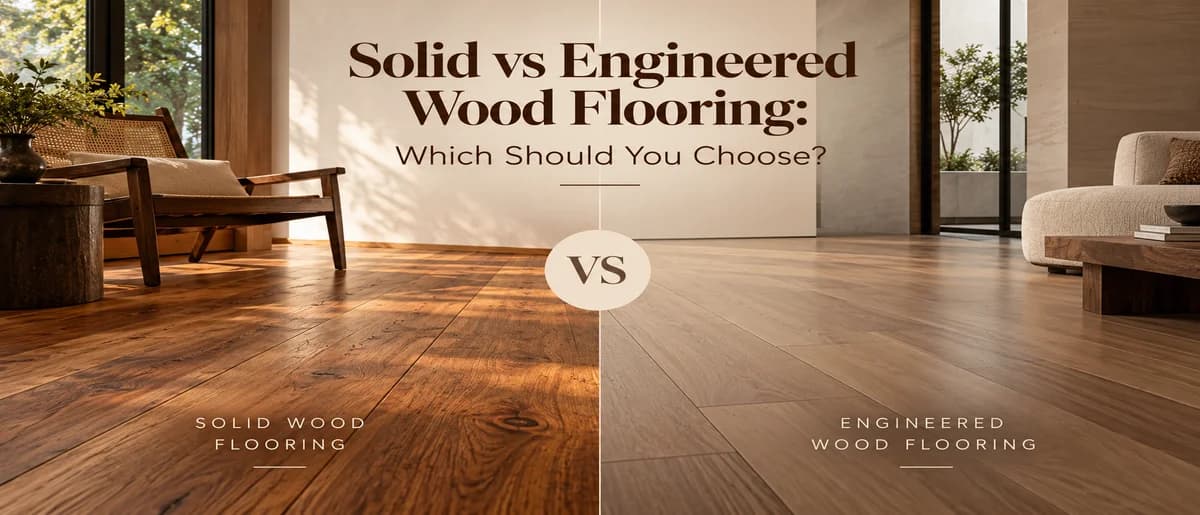
Wood flooring continues to be a preferred choice in contemporary interiors for its natural warmth, distinctive grain and timeless appeal. But choosing the right kind of wood flooring amongst the large number of options available, the key determining factors become more than choosing the colour, pattern and grain. The two most commonly used real wood flooring are Solid Hardwood Flooring and Engineered Wood Flooring. Both floors bring natural wood character and visual appeal and set the tone of the entire space. Understanding the difference between these two will help you to make a better informed decision.
What Is Solid Hardwood Flooring?
Solid wood flooring incorporates 100% real timber and it is crafted from a single piece of timber , cut and shaped through precision to keep the natural integrity of the wood intact. As it comes from a single piece of timber slab, its thickness provides immense strength and durability and also provides the ability to refinish many times which ensures its longevity, across decades. Each timber board goes through kiln-dried to ensure stability and then milled with interlocking tongue- and-groove edges which creates a space for seamless fit.
Solid hardwood flooring can be finished or sanded based on the project requirement, regular foot fall and other architectural parameters and above all what kind of finish the project demands. This finish ensures the surface stays intact for years. As natural timber responds to changing weather, moisture level and humidity, proper moisture management, acclimatisation and installation becomes important to ensure longer service life. If you leave the flooring without polish it can develop an additional character rather than appearing uniform.
What is Engineered Wood Flooring?
Engineered wood flooring combines the timeless appeal of hardwood while offering the long lasting performance, durability and stability that modern architecture demands. Unlike solid Hardwood Flooring, engineered wood flooring undergoes different crafting and installation procedures which ensures its stability across changing weather. For this kind of flooring, each plank is made with three different layers: a real hardwood top layer, a stabilising core layer and a balancing base. This layered making approach gives the flooring exceptional stability and prevents challenges like wrapping, shrinking and expanding which can be seen in Solid Hardwood Flooring.These layers are bonded in a cross-grain structure, a technique that dramatically reduces the effects of seasonal expansion and contraction. This engineering ensures that the floor maintains its integrity even in challenging climates.
Natural Wood Flooring: Why Does It Remain Popular?
Natural wood flooring contains 100% real hardwood slabs to construct the flooring which can not be fully replicated by any manufactured flooring which uses other elements as well. No two boards are exactly alike, and subtle differences in grain and colour contribute to the character of the finished floor which makes it more natural and authentic real wood feel.
Natural wooden flooring can be done with different wood spices. The most popular ones in terms of natural flooring is Oak, which offers profound grain and real wood feel, then Ash which is little light in colour and creates a minimal pastel feel with a more open appearance. The right of wood flooring can have a significant influence on the overall look and feel of any interior. Natural wood flooring has been used in traditional and contemporary architecture both because it blends out beautifully with other building materials like stone, metal, glass, leather and textiles. To set the tone of the interior, the finish you are choosing also matters too. A matte finish can retain a more understated, natural appearance, while other finishes can emphasise the depth and tonal variation of the timber.
Engineered Wood Flooring vs Solid Hardwood Flooring
Choosing the right flooring option suitable for your space depends on multiple determining factors like - the overall theme of the interior, expected foot fall, environmental conditions, installation method and the desired outcome.
Solid wood flooring becomes the most preferred choice when the project needs authenticity, visual appeal of real timber and the flooring is the center of the overall design. It can also offer the possibility of repeated refinishing over its service life, depending on the thickness. It can also be sanded and refinished multiple times (lasting 80 to 100 years) because the entire thickness is solid timber.
Engineered Wood flooring becomes suitable for projects where installation flexibility, easy workability and defined stability are the key priorities. Its real wood surface combines the intended real wood appearance and character and three layer construction which is designed to respond more consistently to changes in indoor conditions. The criss-cross core layers resist warping and moisture fluctuations, making it much more stable for long term performance. In engineered wood flooring refinishing comes with limitations because only the top layer has real hardwood in it.
Factors That Determine Your Wooden Flooring Choice
Choosing the right flooring depends on multiple deciding factors, but the most important question becomes “Where do you want to install that flooring?”. Solid wood flooring and Engineered wood flooring both can work for commercial and residential spaces depending on the project needs, environment and expected foot fall. Keeping everything in mind, choose the right kind of flooring based on timber species, board width, thickness, grade and finish. A wider board can impart a more expansive visual effect, while different grades can be relatively uniform or highly characterful.
The choice between engineered hardwood flooring and solid hardwood flooring ultimately depends on matching the right material with the space. Each project comes with different aesthetic, perforation and maintenance requirements and choosing the right kind of flooring to get the desired outcome becomes very important.
At Lognest , timber is approached as an architectural material rather than simply a surface finish. They deal with 100% real timber for interior and exterior applications including different flooring options with multiple patterns and designs to choose from. Whether you choose between solid hardwood flooring or engineered wood flooring the right solution depends on the species, construction, finish and requirements of the space. Choose the timber flooring that works with your design intent, your interior conditions and the way you want the material to age over time.
Frequently Asked Questions
Is engineered wood flooring work better than solid hardwood flooring?
Not necessarily. Solid flooring offers an all-timber construction, while engineered flooring combines a real timber surface with a layered core designed for greater dimensional stability. The better option depends on the project's requirements.What is engineered flooring with birch plywood?
Engineered flooring with birch plywood uses birch plywood as the structural core beneath the real timber surface. The suitability of this construction depends on its overall specification, thickness, installation method and intended application.Can solid wood flooring be refinished?
Yes. Solid timber flooring can generally be sanded and refinished multiple times, depending on the thickness of the boards and the amount of usable timber remaining above the fixing system.Does engineered wood flooring serve real wood finish?
Yes. The surface layer is genuine timber, so the visible grain, colour and natural character come from real wood.Which is more stable: solid or engineered flooring?
Engineered flooring is generally designed to provide greater dimensional stability because of its layered construction. However, proper installation and suitable indoor conditions remain important for both flooring types.