Hardwood Types in India: Common Hardwoods and Their Uses
Explore common hardwood types used in India, from IPE and teak to oak and ash, their unique characteristics, applications and how to choose the right timber for your project.
Introduction
Not all wood is made for the same purpose. Some species are chosen for the warmth they bring to an interior, others for the way they withstand daily wear, and some for their ability to perform in demanding outdoor environments. When exploring hardwood types in India, the decision should go beyond colour and grain. Density, natural durability, dimensional stability, exposure conditions and intended application all influence how a particular species performs.
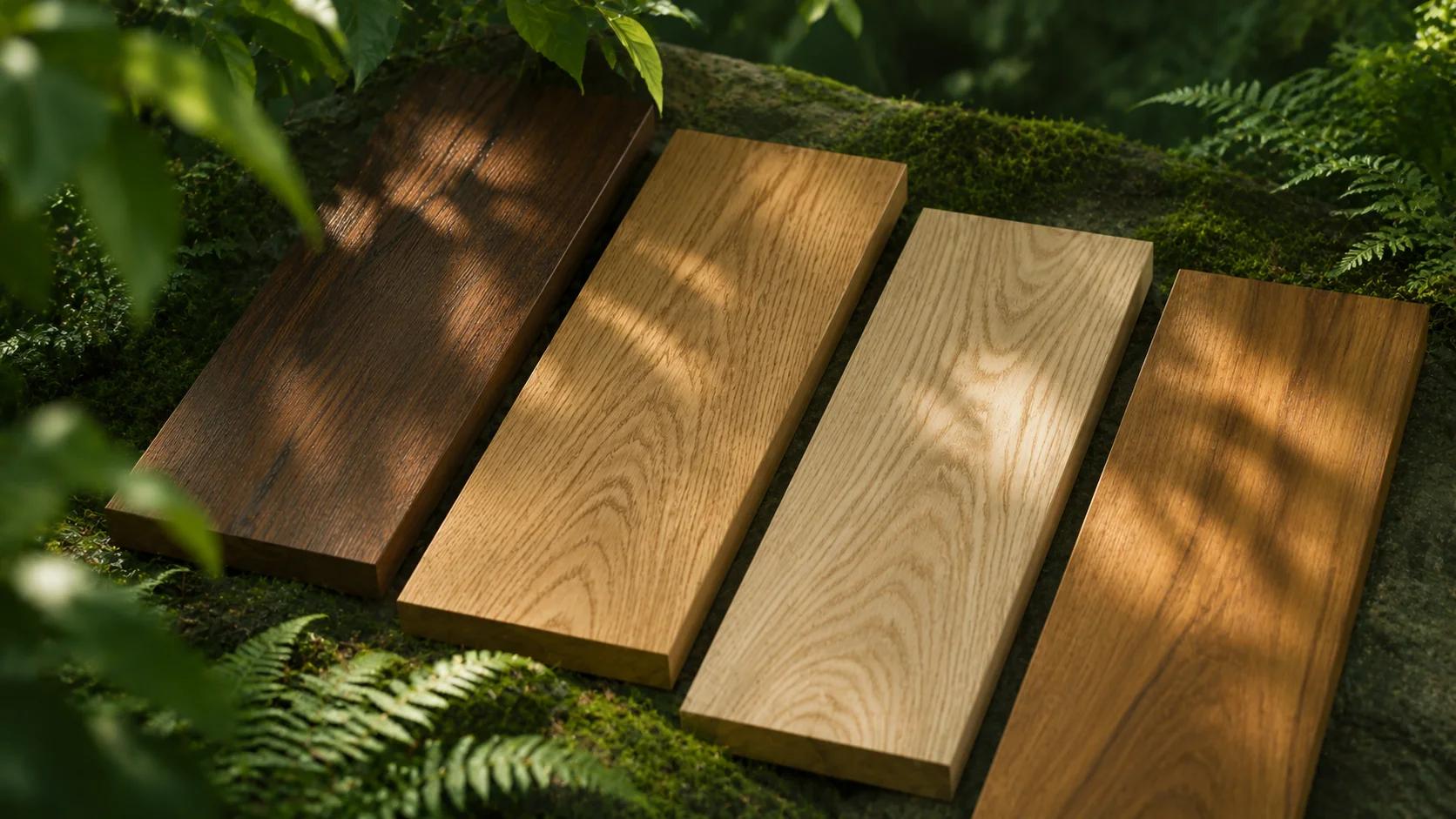
From the rich character of oak wood to the exceptional density of IPE wood, here are some commonly specified hardwoods and where they work best.
What are the common hardwood types used in India?
1. IPE Wood: For Demanding Exterior Applications
IPE wood is a tropical hardwood known for its exceptional density, hardness and natural durability. Its colour ranges from olive-brown to deep chocolate brown, often with subtle variations across individual boards.
These characteristics make IPE wood particularly suitable for demanding outdoor applications, including timber decking, exterior cladding, boardwalks and outdoor structures. Its high density helps it withstand wear and exposure, although it also makes machining and installation more demanding.
Best suited for: Exterior decking, facades, walkways and outdoor architectural elements.
2. Oak Wood: For Timeless Interior Spaces
Oak is widely appreciated for its distinctive grain, natural colour variations and versatility in interior applications. White oak wood, in particular, is valued for its pale tones, prominent grain and good heartwood decay resistance. It can be finished in different ways to create anything from a natural Scandinavian-inspired interior to a richer, more traditional setting. Oak is commonly used for flooring, furniture, cabinetry and wall panelling.
Best suited for: Solid and engineered wood flooring, wall panelling, furniture and interior detailing.
3. Ash Wood: For Light and Contemporary Interiors
Ash is recognised for its lighter appearance, prominent grain and relatively high strength-to-weight ratio.
Its pale, neutral tones make it an appealing choice for contemporary interiors where the objective is to introduce natural texture without making the space feel visually heavy. Thermally modified ash is also used in exterior applications, where the modification process improves dimensional stability and resistance to decay.
Best suited for: Furniture, flooring, wall panelling and thermally modified exterior applications.
4. Teak Wood: For Classic Durability
Teak has long been associated with high-quality furniture, joinery and outdoor applications.
Its natural oils and durability make it particularly valued in environments where moisture resistance is important. The colour ranges from golden brown to deeper brown tones, with a grain that develops a distinctive appearance over time. Teak is commonly used in furniture, doors, windows, joinery and outdoor structures.
Best suited for: Furniture, doors, windows, outdoor furniture and selected decking applications.
How do IPE, oak, ash and teak compare?
Wood Species | Key Characteristics | Common Applications |
IPE | Extremely dense, hard and naturally durable | Decking, exterior cladding, walkways |
Oak | Distinctive grain, durable heartwood, versatile finishes | Flooring, furniture, panelling |
Ash | Light appearance, prominent grain, good strength | Furniture, flooring, panelling |
Teak | Natural oils, good durability, warm colour | Furniture, joinery, outdoor applications |
Which hardwood is best for decks, floors and furniture?
There is no single hardwood that performs best across every application. The right choice depends on the demands placed on the material.
For decking: IPE is a strong option for outdoor areas exposed to regular foot traffic and weather. Thermally modified ash may also be considered where a lighter appearance and improved dimensional stability are desired.
For flooring: Oak offers a versatile combination of natural character, durability and finish options. Ash can be considered for interiors that call for a lighter, more pronounced grain.
For furniture: Teak, oak and ash each offer distinct visual and working characteristics. The choice often comes down to the desired finish, design language and intended use.
For exterior facades: IPE and appropriately thermally modified timber are options worth considering. Their suitability depends on the exposure, detailing, fixing system and maintenance expectations.
How do you choose the right hardwood?
Before selecting a species, consider five factors:
Application: Is the timber intended for flooring, furniture, decking or cladding?
Exposure: Will it be used indoors, outdoors or in a partially covered space?
Durability: What level of resistance to moisture, wear and biological attack is required?
Appearance: Do you prefer a lighter grain, warm brown tones or a deeper, richer finish?
Maintenance: Are you comfortable with periodic oiling, refinishing or natural weathering?
It is also important to verify the timber's origin, grade, technical specifications and responsible sourcing documentation.
Conclusion
The best hardwood is not necessarily the hardest or most expensive one. It is the species that responds well to the conditions and purpose of the space. A well-chosen hardwood brings more than surface appeal. It contributes texture, character and long-term performance to the architecture around it.
At Lognest, exploring hardwood is about finding the right relationship between material, application and design.