Hard Wood Explained: Oak, White Oak & How to Choose
A clear guide to hard wood; what the term really means, how oak and white oak differ, and where each type of hardwood belongs.
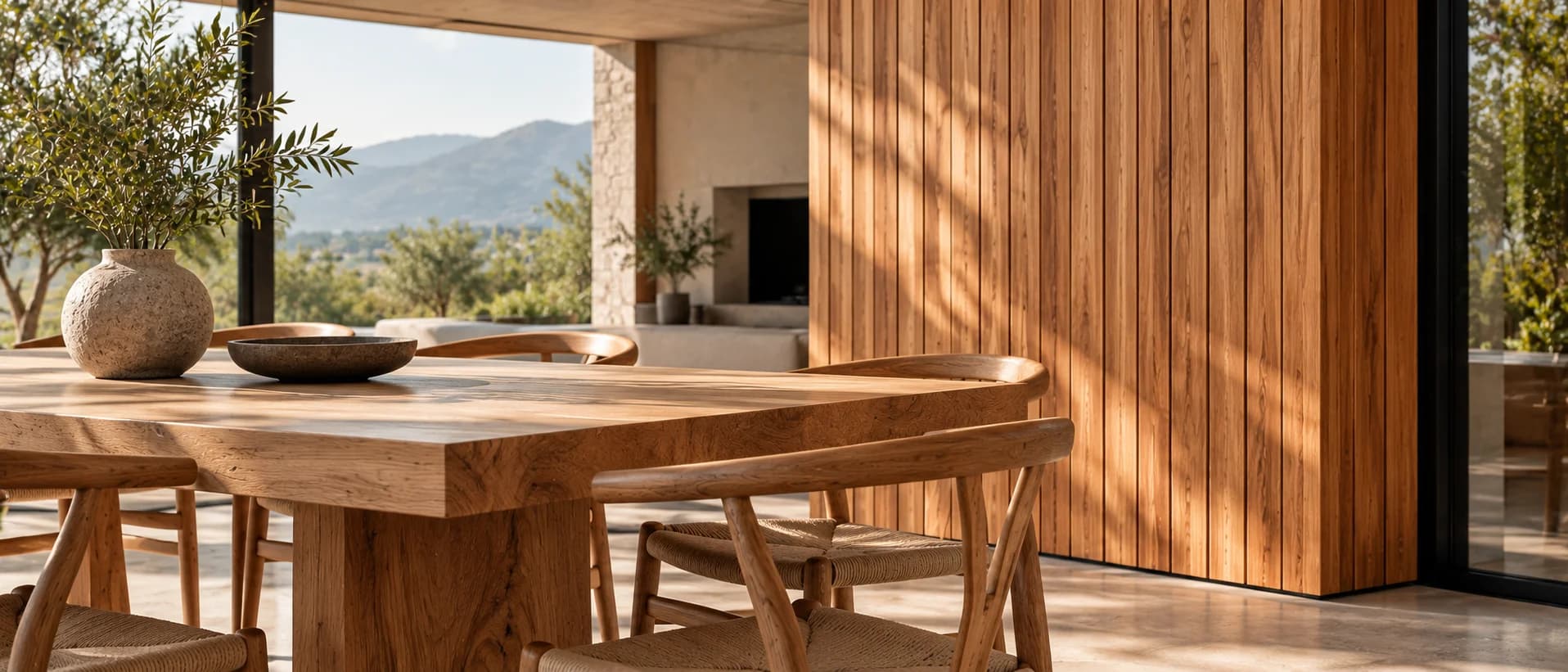
Wood has been a preferred building material for centuries. It was first used in the prehistoric era as branches and logs, to create shelter. In the ancient and medieval period, its use grew with timber being used to support roofs, columns and beams to being prominently utilised in building homes, halls and religious buildings. The industrial era witnessed mechanised wood mills, easing accessibility to quality timber. This led to its widespread use in housing, especially in North America. Till today, natural timber remains one of the most valued building materials in architecture & interior design.
Based on the nature of the tree it comes from, wood can be categorised into hardwood & softwood.
What is softwood?
‘Softwood’ refers to wood that comes from gymnosperm i.e. cone-bearing trees such as pine, spruce and fir, whose seeds are not enclosed in the fruit. Softwood is often preferred for structural construction, but it is not the preferred choice for every architectural application. In outdoor use especially, softwood is uncommon due to its affinity to moisture and decay.
What is hardwood?
'Hardwood', on the other hand, generally refers to the wood that comes from angiosperms, which are basically flowering trees whose seeds are enclosed in the fruit (for eg: walnut, mango etc). The wood coming from such trees generally has complex grain patterns which often make hardwood stronger and heavier, as well as more visually appealing than softwoods. This is one of the reasons why hardwoods are often used in furniture, flooring, cabinetry and other woodworking projects where both strength and looks are important. Despite the name “hardwood”, the wood from this group doesn’t necessarily mean that they are physically hard. Balsa, for example, is technically a hardwood and is actually among the softest wood in the world.
Among the most popular hardwoods, Oak is one of the best-known hardwoods, valued for its strength, durability and distinctive grain.
Oak Wood
Today, oak stands out as one of the most wanted hardwoods. It is known not just for its strength and toughness but also its visual appeal in woodworking. Oak comes from a variety of tree species within the genus "Quercus". These trees are mainly found in the northern part of the world. Two sub species of oak - Red & White Oak - are most commonly used in woodwork. Red Oak with its pores is generally more suited for interior projects, whereas white oak has a closed cellular structure that generally works much better when moisture is a problem. At the moment Oak Wood is the standard against which most of the woods are compared, as Oak Wood is stable enough for joinery projects and yet is hard and durable enough for high-traffic applications like flooring too.
White Oak Wood
White oak, despite its name, is not actually white. Fresh white oak is usually in light to brown tones with subtle olive shades. Although white oak wood is much denser and harder than many of the used hardwoods, its most important qualities come from its internal structure.
Natural Rot Resistance: White Oak has natural growths called tyloses that close its pores; these natural blocks make the wood water-resistant and thus very resistant to decay.
Durability: White oak is known for its long life, and if properly cared for, oak furniture and flooring can last for many years, making it a smart investment.
Weight and Density: White Oak is a hardwood, and furniture made from it feels solid, providing strength and making it perfect for tables, desks and architectural elements where lasting presence is needed.
Timeless Visual Appeal: The deep grain pattern and natural texture make Oak ideal for rustic home styles.
Red Oak Wood
Red oak is one of the most widely used hardwoods in furniture making, cabinetry and interior applications. It is recognised for its warm, reddish-brown tones and prominent grain patterns, which bring depth and character to wooden surfaces.
Distinctive Grain Pattern: Red Oak features prominent, open grain patterns that add natural character and visual depth to furniture, flooring and interior woodwork.
Strength and Durability: Red Oak offers good strength and wear resistance, making it suitable for furniture, cabinetry and flooring in frequently used interior spaces.
Workability and Finishing: Red Oak is relatively easy to machine, cut and shape, and it responds well to stains and finishes, allowing for a range of colours and surface treatments.
Warm Visual Appeal: Its characteristic reddish-brown hues and varied grain patterns bring warmth and texture to interiors, making it a popular choice for both traditional and contemporary designs.
Hardwood vs Softwood
There is no answer on which is better between hardwood and softwood; rather, it very much depends on the project you are working on, and more often than not, you are likely to use different types of timber to get the results you want. However, if we have to talk about the differences between the two, the main difference is the strength of both woods.
Strength and Durability: Hardwoods are usually denser, tougher, and more wear-resistant than softwoods, which are usually lighter and less durable.
Growth and Density: Compared to softwoods, hardwoods often grow more slowly and have a more intricate internal structure, which frequently results in a higher density.
Ease of Handling: Hardwoods are typically more challenging and time-consuming to cut, shape, and deal with than softwoods.
Finishing and Treatment: Softwoods typically make it easier to apply finishes and treatments, but hardwoods might be more difficult to paint, treat, or finish.
Uses of Oak Wood
Furniture: Tables, chairs, cabinets and wardrobes where stable; fine-grained species hold detail and joints well.
Flooring: Wood flooring, parquet flooring and decking where oak, ash and walnut resist daily wear and can be refinished many times.
Construction: Beams, doors, window frames and panelling, where hardwood gives the strength and quality.
Outdoor Applications: Benches, garden furniture and decking where dense species such as IPE or strong species such as oak survive all kinds of weather conditions.
Thermally Modified Oak Wood
Modified oak takes the natural strength of oak and adds even more strength and resistance through a controlled heat treatment process. This process changes the wood’s structure. It makes the wood less likely to soak up moisture. As a result, it stays more stable when humidity changes. This helps prevent swelling and shrinking. That makes thermally modified oak a choice for tough architectural uses.
Enhanced Stability: Thermal modification reduces how much moisture the wood absorbs. This helps reduce swelling, shrinkage and movement caused by humidity changes.
Durability: The heat treatment makes the wood more resistant to various types of biological decay. This can help extend the life of the wood if it is chosen properly and cared for over time.
Rich Natural Colour: The thermal process deepens the colours of oak. It creates shades of brown and these tones work well with interiors and architectural finishes.
Distinctive Texture: Oak retains its characteristic grain patterns after treatment, combining natural visual depth with a refined, consistent appearance.
Versatile Applications: Thermally Modified oak can be used in many ways as it works for wall panelling, flooring, cladding and other architectural parts. The exact use depends on the product details as well as how it will be exposed to the elements.
FAQs
Is oak wood for outdoor furniture?
Yes, especially white oak, which is more resistant to moisture and rot.
Which is better for use: red oak or white oak?
When choosing between red and white oak, resistance often comes to play as the main factor, where we see that red oak is generally rated low while white oak is rated high in resistance from elements.
How long does oak wood furniture last?
With the proper care and maintenance, oak furniture can last for many years.
Does oak wood need heavy care?
Regular cleaning and occasional polishing are enough to keep oak wood shaped.
Is oak wood expensive?
It is moderately priced, making it a smart choice compared to teak and mahogany.
Choosing the Right Hard Wood with Lognest
The right wood depends on where it will be used and how it will be used. At Lognest we work with quality, responsibly sourced wood, including FSC-certified options, and can help you choose species, grade and finish tailored to your project.